

.png)
.png)
.png)
.png)
_2026122-125305.png)
_2026122-125305.png)

_2026122-125305.png)
_2026122-125305.png)
_2026122-125305.png)









Could caffeine be your new go-to training aid? Here’s what sports nutritionist Rob Hobson says about using caffeine to support training and performance.
When you think of caffeine, you probably think of your morning coffee. However, caffeine has many more uses than just being a part of your morning routine. It can also be a helpful training aid, benefiting anyone who exercises or plays sports. Sports Nutritionist Rob Hobson explains that caffeine is a well-researched performance enhancer - otherwise known as an ergogenic aid.
"It's been shown to improve performance in lots of different exercises, especially endurance and high intensity," says Hobson.
Taking caffeine before a workout relates to strategic caffeine intake that can elevate your exercise performance. This article will discuss the benefits of caffeine, why pre-workout supplements, like caffeinated gum, can help, and how caffeine helps with different workouts and exercise regimes.
What are the Benefits of Having Caffeine Before A Workout?
For most individuals, strategically timed caffeine before a workout can be a fantastic tool for performance enhancement.
"Studies show that caffeine can enhance endurance by increasing the time to exhaustion, particularly in sports like cycling and running," says Hobson.
Essentially, caffeine reduces the perception of effort, making exercise seem easier and allowing one to train or compete for longer. Much of sports nutrition involves analysing and understanding what happens to one's body when taking particular stimulants to examine how much they help with performance.
Research highlights that caffeine acts as a central nervous system stimulant. It works by blocking adenosine receptors in the brain. Adenosine is a neurotransmitter that promotes relaxation and sleepiness. By blocking it, caffeine reduces fatigue and makes you more alert, which is the perfect state to be in when you're about to hit the gym or work out.
Caffeine also helps release adrenaline, enhances focus and energy, and can even influence fat oxidation, encouraging your body to use fat stores as energy during a workout. With all of these effects, caffeine can have a positive impact on your workout by improving your performance.
In fact, research published in the Journal of the International Society of Sports Nutrition (ISSN) has found that caffeine improves physical performance in trained and untrained individuals, so no matter where you are in your fitness journey, caffeine could help (research).
What Types of Workouts Can Caffeine Help Me With?
Caffeine can boost mental and physical performance, so it's regarded as one of the most effective and widely researched ergogenic aids available. It provides a noticeable surge in energy and sports performance, but it's also excellent at maintaining focus.
"Caffeine stimulates the central nervous system, which means improved mental focus, alertness and concentration," explains Hobson.
This is particularly useful in sports that require sustained attention, such as tennis, road cycling, football and basketball.
"These may involve changing game tactics and defence strategies over the course of a fast-paced match," says Hobson.
With this in mind, there are many workouts and sports activities where performance can benefit from caffeine. Whilst you may normally ingest caffeine by drinking brewed coffee, espresso, instant coffee, and energy drinks, caffeine supplements can offer a more controlled and potent way to get the precise milligrams of caffeine needed to improve your workout.
We'll focus on how taking caffeine can improve specific workouts to give you a better idea of how it can help.
Strength Training
Caffeine before a workout can be excellent for strength training because it can significantly increase muscle strength and power output. Upon taking it, you may find that you're able to lift heavier weights or perform more repetitions or just feel more focused during the workout.
Cardio Exercise
Caffeine can enhance aerobic endurance, improving any workout that involves hitting the treadmill or running. By increasing fat oxidation and delaying feelings of fatigue, caffeine can help you keep going for longer. Caffeine can help you push past that feeling of hitting a wall, making your cardio sessions last longer and become more enjoyable.
Endurance
Caffeine can be an excellent option for endurance athletes. Caffeine's ability to reduce perceived exertion can make running a marathon, cycling long distances, or swimming laps feel easier, helping you get more from your workout. This helps improve muscular endurance, allowing you to maintain a higher intensity for longer.
HIIT - High Intensity Interval Training
HIIT sessions demand a high amount of energy in short, concise bursts. Caffeine before a workout can significantly improve your ability to perform during these intense periods of exercise. Reducing fatigue between sets enhances power output, meaning you can push harder and recover more effectively during the active rest periods. This can lead to more productive HIIT sessions as caffeine can help you give it your all.
Can Caffeine Help You Overcome Tiredness?
Research has also found that caffeine may 'improve cognitive and physical performance in some individuals under conditions of sleep deprivation', making it useful when exercising with minimal shut-eye (research).
For a quick caffeine hit, try Healthspan Kick−Start Caffeine Gum, which contains 100 mg of fast-release caffeine per gum.
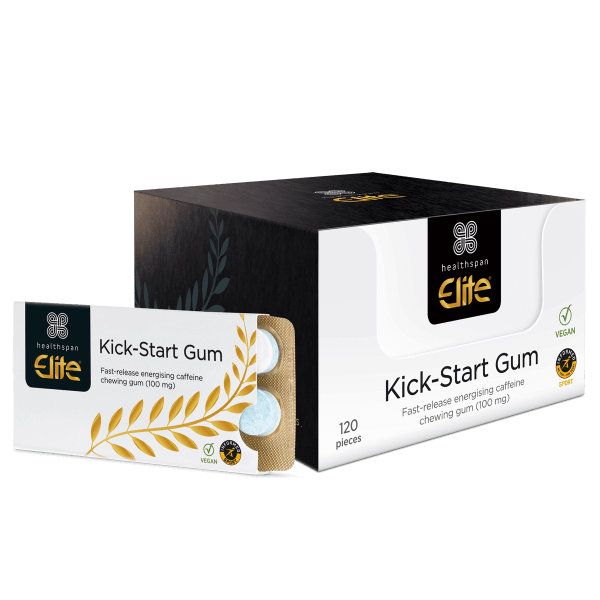
Kick-Start Caffeine Gum
Quick-release energy boost
- 100mg caffeine per mint-flavoured gum
- 85% absorbed in 10-15 minutes
- Increases mental alertness
What are the Potential Side Effects of Caffeine?
There are potential side effects of taking too much caffeine before a workout that you should be aware of. Overdoing your caffeine intake can result in feelings of anxiety, jitters, and a noticeable increase in heart rate. For some, taking too much of it could lead to an upset stomach or other issues with the digestive system. And, while caffeine can be great when trying to work out on minimal sleep, it can also disrupt sleep quality, making it harder to fall asleep if you take it later in the day.
These effects will likely be more prominent in those with a high caffeine sensitivity, so it's always best to stick to the recommended dosage.
Hobson adds, "If you regularly drink caffeinated drinks, you can build up a tolerance, reducing their effectiveness as a performance-enhancing aid. Anyone who uses caffeine frequently may need to take short breaks to maintain its efficacy."
If you suffer from a specific health condition, such as a heart issue, high blood pressure, or anxiety disorder, you should also be cautious, as caffeine can worsen these conditions.
"Pregnant or breastfeeding women should also limit their caffeine intake to below 200 to 300 mg daily during these periods," adds Hobson.
Ultimately, caffeine is scientifically backed to help support exercise performance, but the potential side effects should be considered. When taking it as part of your workout, the goal is to enhance brain function and cognitive performance to help you get the most from it. It's important to listen to your body - it can often be a case of trial and error until you find the best caffeine supplement and dose for you.
To learn more about using caffeine strategically, read our guide: Caffeine for athletes: all you need to know.