

.png)
.png)
.png)
.png)
_2026122-125305.png)
_2026122-125305.png)

_2026122-125305.png)
_2026122-125305.png)
_2026122-125305.png)









It's a simple fact that when it's hot you need to drink more, and this is especially relevant if you're heading somewhere warm for an active holiday. Here you can find out everything you need to know about dehydration and how to prevent it.
🕒 4 min read
What is dehydration?
Put simply, dehydration is when you're losing more fluid than you're taking in. Although changes in fluid balance are normal – you can lose a litre of fluid while you sleep, but compensate for this when you wake – dehydration is when you lose fluid to the extent that it impacts your physiological function.
What happens when you become dehydrated?
First, you need to understand the basic principles of physiology and the body's fluid dynamics. The body is a multi-cell organism, but its individual cells follow some of the basic principles of simple, single-cell creatures such as amoeba. A cell is dependent on fluid to maintain its structure and function, and there is a constant flow of fluid and metabolites (waste) between the inside and the outside of the cell.
If the fluid outside the cell becomes more concentrated than the fluid inside (due to dehydration), water will move through the cell membrane to the outside of the cell to maintain balance – a process known as osmosis. If too much fluid moves out of the cell, it will affect its performance.
How do we become dehydrated?
There are three main ways that you lose fluids:
- Excretion: urine, which is mainly controlled by an anti-diuretic hormone called vasopressin, and faeces. If we have diarrhoea, we can lose a lot of fluid through the bowels.
- Sweat: this is one of the body's prime cooling strategies. When we sweat, the latent heat of evaporation cools us down.
- Ventilation: every time we breathe, we lose some fluid in our breath. This is one of the main contributors to dehydration at altitude, as we have an increased ventilation rate.
You should also consider the body's fluid compartments and how dehydration may impact these different compartments. The most relevant fluid compartments to anyone exercising are:
- Muscle cell fluid: if this is reduced, it can affect the function of the cell, particularly in endurance exercise. Other effects can include increased oxidative damage and reduced protein synthesis.
- Cerebral spinal fluid: this is the fluid that bathes the brain. Although research in this area is limited, there is evidence to suggest that dehydration affects the ventricular spaces in the brain. Research has shown that dehydration can reduce cognitive function and cause headaches; the headache after a night of drinking is believed to be related to the dehydration effects of alcohol.
- Plasma volume: this is our blood volume. As we dehydrate, this volume decreases, making the blood thicker. The heart then has to work harder to pump the blood around the body.
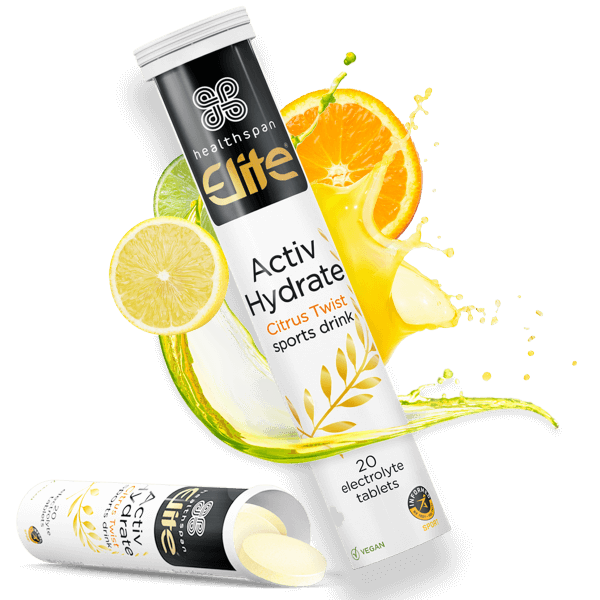
Elite Activ Hydrate
Delicious fruit-flavoured electrolyte drink to replenish minerals lost during exercise
- Replenishes the essential electrolytes sodium, calcium, magnesium and potassium
- Contains 300mg sodium
- Informed Sport-accredited
Spotting dehydration
Dehydration can creep up on you, even in the winter. Signs include increased thirst, increased exertion (having to work harder than normal for the same result), an increased heart rate and dark, concentrated urine.
What can you do?
When it comes to preventing dehydration, there are different schools of thought. Some people judge by the level of thirst, while others prescribe a strict drinking protocol. I have a more pragmatic approach and consider the goals that we are trying to achieve from a performance point of view. At a cycling race such as the Tour de France, my main hydration priorities are rider health and wellbeing, followed by performance.
When the temperature is above 25°C, I recommend that the riders aim for one litre of water per hour. We work on a positive hydration strategy, which aims to maximise the drinking opportunities for the riders. We also monitor urine daily, and the fact that we look at this really pushes hydration up the riders' list of priorities.
You can judge this yourself simply by looking at the colour of your pee; if it's dark yellow or orange, you're likely to be dehydrated. There are many urine colour charts available online, including on various NHS websites.
Treating and preventing dehydration
Although water by itself is useful to combat dehydration, including electrolytes (such as sodium, potassium and magnesium) in drinks helps to push the fluid into the blood and muscle cells. Electrolyte tablets have revolutionised hydration drinks, especially for people who are exercising but who do not necessarily want the calories present in sports drinks.
The tablets are easy to carry and mix with normal drinking water to make an electrolyte drink. They are particularly useful if you go to the gym or cycle before work and get a good sweat up, then go to an air-conditioned office, which can exacerbate dehydration.