

Products
Subtotal
£0.00
Est. delivery
FREE
Order total
£0.00

Please enter a promotion code

Sorry, the coupon code you have entered is invalid or has expired.

Finish

WHY YOU SHOULD SUBSCRIBE

Unlock the full benefits of supplements by incorporating them consistently into your routine.


HOW TO SET UP SUBSCRIBE & SAVE

CHANGING YOUR SUBSCRIPTION

We give you complete control to manage your subscription. You can pause or cancel at any time with no fees or charges. You can also change the frequency of your deliveries.


FAQs

How much do I pay?

Subscriptions are set up using a credit or debit card. Your card will be debited every time the product is dispatched..

Plus, our Price Match Promise* ensures you will always receive the best available price on your subscription products, even if the one-time purchase price on our website falls below your ongoing subscription price.

How do I sign up for Subscribe & Save?

It’s simple to subscribe to a product; just select the 'Subscribe & Save' option, choose the delivery frequency you require and click 'Set up now'. Your subscription will be added to your basket like a normal order.

After you have placed the order you will receive an email confirmation with all the details. You will then be able to see your subscription details on the ‘My Subscriptions’ page in your account area on the website too.

How easy is it to edit my subscription?

It’s easy to change the frequency of your deliveries. You can manage your subscriptions on the website by logging into your account and clicking ‘My subscriptions’. Here you can view and edit all of your active subscriptions. Alternatively, phone our friendly call centre on FREEPHONE 0800 73 123 77.

Can I cancel a subscription?

Yes, you can cancel your subscription at any time by contacting our customer service team on 0800 7812345. Please note subscriptions must be cancelled 72 hours before the scheduled dispatch date to avoid any charges.

Is it possible to delay my subscription?

Absolutely. You can manage your subscriptions on the website by logging into your account and clicking ‘My subscriptions’. Here you can view and delay any of your active subscriptions. Alternatively, phone our friendly call centre on FREEPHONE 0800 73 123 77.

Further information can be found on our Subscribe & Save Policy and Terms & Conditions pages.


*Price match promise is based on the one time purchase price excluding new subscription discounts and voucher offers.


UK
CostTarget delivery times
UK Super Saver - SubscriptionsFREE Approx. 3-4 working days  
UK Super Saver - orders over £40
FREEApprox. 3-4 working days 
UK Super Saver - orders under £40FREE Approx. 3-4 working days
UK Priority Service£2.95Approx. 1-2 working days
UK Courier£7.95 Next working day (for orders placed before 1pm*)
*Remote location delivery times may vary - details listed here

*Orders placed after 1pm on Friday or over the weekend will be dispatched on Monday.

Republic of Ireland


For orders to Ireland, please visit our Irish website: www.healthspanelite.ie 


Europe (EU)
CostTarget delivery times
Royal Mail – Priority Service£7.95Up to 10 working days*
Royal Mail – Priority Service (Subscriptions)£3.95Up to 10 working days*

Rest of WorldCostTarget delivery times
Royal Mail – Priority Service£14.95Up to 15 working days*
Royal Mail – Priority Service (Subscriptions)£3.95Up to 15 working days*

*All transit times are dependent on country of destination and may vary.


WHERE IS MY ORDER?

Orders are being processed and dispatched as normal.

Orders are regularly subject to routine customs checks, which can cause delays. If you are concerned about the whereabouts of your order, please contact us at customercare@healthspan.co.uk or on 0800 80 30 123.

If you are calling from outside the UK please phone +44 2392 714175.

SALE ENDS SOON
UP TO 50% OFF

THE IMPACT OF PHYSIOLOGY ON WOMEN'S HEALTH, TRAINING AND PERFORMANCE

Rob Hobson
Article written by Rob Hobson

Date published 13 June 2022

Find out about the author

Back to article list

Latest articles

Physiological differences exist between men and women. Research in the field is biased towards men, and to help female athletes reach peak performance, they should not just be viewed as smaller male athletes. Here Rob Hobson explores the physiological differences between male and female athletes and how this could impact performance.

How do women differ from men physiologically?

Men and women are physiologically different, including in muscle mass and strength,1 maximal aerobic capacity and performance,2 and anaerobic power and capacity.3 Research shows that a female's absolute whole-body strength is up to 63.5% of a male's,4 while upper body strength is 55%5 and lower limb strength is 72%.6

Interestingly, women's physiology may put them at an advantage in endurance sports. Sex differences in endurance performance are a result of how male and female athletes utilise energy from carbohydrates and fats, and exercise intensity and duration.7

Carbohydrates provide the body with an immediate energy source, but this is limited. Hence, athletes need to refuel during events. By contrast, fatty acids provide a source of dense energy that fuels longer-duration exercises such as marathon running.

During aerobic-based exercise, women preferentially use fatty acids as the dominant fuel source compared with men, who demonstrate lower rates of fatty acid utilisation, relying more on carbohydrates as the dominant fuel source.8

The relatively 'unlimited' fat reserves and the enhanced fatty acid utilisation in women versus men are thought to contribute to favourable endurance performance in women, most notably during prolonged (ultra-endurance) versus less-prolonged (marathon) endurance events.

How can female health issues impact training and performance?

A significant amount of sports performance research is based on men. Often a reason for this is because women are physiologically more variable, partly due to changes occurring during the menstrual cycle.9 The lack of female-specific research is unfortunate, as there are many differences between the sexes, both in terms of physiology and psychology.

Other factors specific to female athletes that may affect performance include the use of oral contraceptives, or HRT in master's athletes. A master's athlete is generally considered to be someone over the age of 40 years.

Female-specific issues need to be considered so that coaches can offer an individualised strategy that complements the athlete's needs. Such issues include the menstrual cycle, breast health, and trends in female injuries. Women are also more prone to nutrient insufficiencies such as iron, resulting in fatigue and depression, impacting performance.
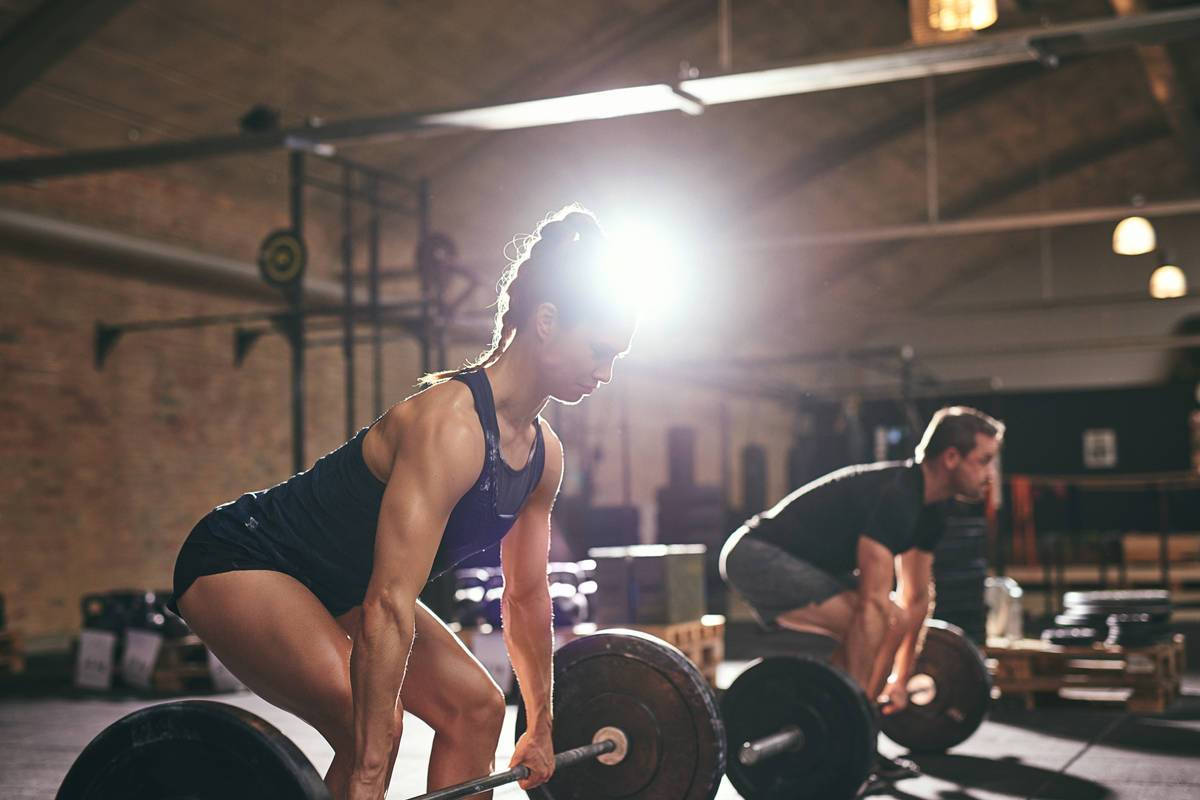
Woman and man lifting heavy weights on a barbell in gym setting

Coaches need to be fully informed about female health and its impact on training and performance so they can offer a truly individualised approach.

What about RED-S?

Women are also more prone to RED-S: Relative Energy Deficiency in Sport. This used to be called the "Female Athlete Triad" (disordered eating, menstrual disturbance, low bone density) but was renamed to reflect that it also occurs in men and impacts more than the three original areas originally described.

The condition occurs when an athlete does not have enough energy to meet the demands of the amount of exercise they perform. Athletes more prone to RED-S include endurance athletes who benefit from a high power-to-weight ratio, athletes in weight category sports such as boxing, and aesthetic sports such as gymnastics and diving.

Alongside resulting in insufficient energy to achieve peak sports performance, RED-S also impacts an athlete's ability to maintain overall optimal health and other bodily functions. This can result in irregular periods, recurrent illnesses, mood changes, delayed growth and development, and nutrient deficiencies.10

What injuries are more prevalent in women?

Research shows that women incur more stress fractures, shoulder injuries, ankle sprains, and ACL injuries in the knee than men.11, 12, 13 Low bone mineral density can increase the risk of musculoskeletal injury. This is particularly relevant to athletes diagnosed or previously diagnosed with RED-S and older athletes during menopause.

Ligamentous laxity (very flexible joints) is more significant in women, explaining why they experience ankle sprains twice as often as men.12 Research has also shown that women are at greater risk of overuse injuries, including stress fractures, tendonitis, and medial tibial stress syndrome (damage to the shin area).14 It has also been shown that female athletes in jumping and cutting sports (football, basketball, lacrosse) are up to six times more likely to sustain a severe knee injury than males.15

Like this article? Share it!

 
Rob Hobson

About Rob Hobson

Rob Hobson MSc RNutr is an award-winning registered nutritionist (AFN) and sports nutritionist (SENR) with over 15 years of experience. He founded London-based consultancy RH Nutrition, and has degrees in nutrition, public health nutrition and sports nutrition.

robhobson.co.uk

References

1Ford, L. E., Detterline, A. J., Ho, K. K., & Cao, W. (2000). Gender- and height-related limits of muscle strength in world weightlifting champions, Journal of applied physiology (Bethesda, Md. : 1985) 89(3), 1061–1064
2Cheuvront, S. N., Carter, R., Deruisseau, K. C., & Moffatt, R. J. (2005). Running performance differences between men and women:an update, Sports medicine (Auckland, N.Z.) 5(12), 1017–1024
3Hill, D. W., & Smith, J. C. (1993). Gender difference in anaerobic capacity: role of aerobic contribution, British journal of sports medicine 27(1), 45–48
4Knapik, J. J., Wright, J. E., Kowal, D. M., & Vogel, J. A. (1980). The influence of U.S. Army Basic Initial Entry Training on the muscular strength of men and women, Aviation, space, and environmental medicine 51(10), 1086–1090
5Sharp M. A. (1994). Physical fitness and occupational performance of women in the u.s. Army, Work (Reading, Mass.) 4(2), 80–92
6Shephard R. J. (2000). Exercise and training in women, Part I: Influence of gender on exercise and training responses, Canadian journal of applied physiology = Revue canadienne de physiologie appliquee 25(1), 19–34
7Montero, D., Madsen, K., Meinild-Lundby, A. K., Edin, F., & Lundby, C. (2018). Sexual dimorphism of substrate utilization: Differences in skeletal muscle mitochondrial volume density and function, Experimental physiology 103(6), 851–859
8Venables, M. C., Achten, J., & Jeukendrup, A. E. (2005). Determinants of fat oxidation during exercise in healthy men and women: a cross-sectional study, Journal of applied physiology (Bethesda, Md. : 1985) 98(1), 160–167
9Bruinvels, G., Burden, R. J., McGregor, A. J., Ackerman, K. E., Dooley, M., Richards, T., & Pedlar, C. (2017). Sport, exercise and the menstrual cycle: where is the research?, British journal of sports medicine 51(6), 487–488
10Dipla, K., Kraemer, R. R., Constantini, N. W., & Hackney, A. C. (2021). Relative energy deficiency in sports (RED-S): elucidation of endocrine changes affecting the health of males and females, Hormones (Athens, Greece) 20(1), 35–47
11Beasley, L., Faryniarz, D. A., & Hannafin, J. A. (2000). Multidirectional instability of the shoulder in the female athlete, Clinics in sports medicine 19(2), 331–x
12Doherty, C., Delahunt, E., Caulfield, B., Hertel, J., Ryan, J., & Bleakley, C. (2014). The incidence and prevalence of ankle sprain injury: a systematic review and meta-analysis of prospective epidemiological studies, Sports medicine (Auckland, N.Z.) 44(1), 123–140.
13Sigward, S. M., Pollard, C. D., & Powers, C. M. (2012). The influence of sex and maturation on landing biomechanics: implications for anterior cruciate ligament injury, Scandinavian journal of medicine & science in sports 22(4), 502–509
14Brunet, M. E., Cook, S. D., Brinker, M. R., & Dickinson, J. A. (1990). A survey of running injuries in 1505 competitive and recreational runners, The Journal of sports medicine and physical fitness 30(3), 307–315
15Hewett T. E. (2000). Neuromuscular and hormonal factors associated with knee injuries in female athletes. Strategies for intervention, Sports medicine (Auckland, N.Z.) 29(5), 313–327