
.png)
.png)
.png)
.png)
_2026122-125305.png)
_2026122-125305.png)

_2026122-125305.png)
_2026122-125305.png)
_2026122-125305.png)









Caffeine is probably already part of your morning routine. The question most runners eventually ask is whether it can do more than just wake you up. The short answer is yes, with a systematic review and meta-analysis of 21 randomised controlled trials finding positive effects on endurance running performance. This guide covers how caffeine works, how much to take, when to take it and the side effects worth knowing before you rely on it on race day.
Jump to:
🕒 6 min read
How does caffeine improve your running performance?
Caffeine works primarily by blocking adenosine receptors in the brain. Adenosine is a compound that builds up during waking hours and contributes to feelings of tiredness. By temporarily blocking its effects, caffeine can increase alertness and reduce perceived exertion during exercise, meaning running at the same pace may feel less demanding.
A systematic review and meta-analysis of endurance running research found that caffeine improved time to exhaustion and produced a small but statistically significant improvement in running time-trial performance. This suggests caffeine may help runners sustain an effort for longer and, in some circumstances, complete a set distance more quickly.
Does caffeine make you run faster?
It can, although the effect is better described as helping you maintain your target pace and delay fatigue rather than producing a sudden increase in speed. The meta-analysis found improvements in time-trial performance, which in practical terms meant runners completing the same distance in a slightly faster time.
Whether caffeine produces a faster finishing time for you personally will depend on factors including the dose, timing, race distance, habitual caffeine intake and your individual response.
Do elite runners use caffeine?
Yes. Caffeine is widely used across professional endurance sport, including distance running, marathon racing, cycling and triathlon.
Caffeine is not included on the current World Anti-Doping Agency Prohibited List, although its use continues to be monitored. Elite athletes should still choose batch-tested supplements and carefully account for their overall caffeine intake.
How much caffeine should a runner take?
Sports performance research commonly uses caffeine doses of around 3–6mg per kilogram of body weight. However, this research range is not the same as a personal dosage recommendation, and higher doses are not necessarily more effective.
Current UK guidance states that single caffeine doses of up to 200mg and a total daily intake of up to 400mg are considered safe for most healthy adults. That total includes caffeine from coffee, tea, energy drinks, gels, gum, tablets, pre-workout products and any other source consumed during the day.
Going above your effective dose increases the likelihood of side effects without reliably providing an additional performance benefit. Always follow the directions supplied with a product and speak to a healthcare professional if you have a medical condition, take medication or are uncertain whether caffeine supplementation is suitable for you.
For longer events such as marathons or ultramarathons, some runners use a lower amount before the event and smaller amounts later in the race rather than taking one large dose at the start. Any strategy should be thoroughly tested during training first.
- Count caffeine from every food, drink and supplement consumed that day.
- Start with a lower amount if you are new or sensitive to caffeine.
- Never test a new caffeine strategy for the first time on race day.
- Avoid exceeding the product's recommended intake.
- Consider the effect that later doses may have on sleep and recovery.
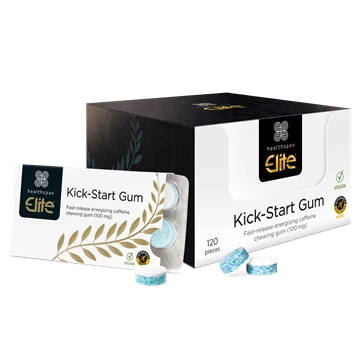
Kick-Start Caffeine Gum
Fast-release peppermint caffeine gum for training and competition
- 100mg caffeine per piece to help increase mental alertness.
- Approximately 85% caffeine absorption within 10–15 minutes.
- With vitamins B3, B6 and B12 to support normal energy-yielding metabolism.
- Convenient individual blister packaging for use before or during exercise.
- Certified and independently batch tested by Informed Sport.
Is drinking coffee before running effective?
Yes, although it comes with some practical considerations. A mug of coffee often provides around 100mg of caffeine, but the exact amount can vary widely depending on the bean, brewing method, serving size and strength.
Coffee can therefore form part of a pre-run routine, but it is harder to calculate a precise dose. Some runners also find that coffee irritates their stomach before exercise, particularly during faster running or in warmer conditions.
A purpose-made caffeine supplement provides a stated amount per serving, making it easier to monitor your intake when consistency matters.
When should a runner take caffeine?
For many traditional caffeine formats, such as coffee or capsules, taking caffeine around 30–60 minutes before exercise allows time for blood caffeine levels to rise. The ideal timing depends on the product format and the runner's individual response.
Caffeine gum is absorbed partly through the lining of the mouth and can act more quickly than swallowed formats. Healthspan Elite Kick-Start Caffeine Gum is designed to provide fast caffeine absorption, with approximately 85% absorbed within 10–15 minutes.
For shorter runs, one planned pre-run amount may be sufficient. During longer-distance events, some experienced runners divide their caffeine intake into smaller amounts so that it is available later in the race, when mental and physical fatigue may be greater.
This does not replace an appropriate carbohydrate and hydration strategy. The current Healthspan Elite Energy Gels provide carbohydrates and electrolytes but do not contain caffeine, so caffeine intake should be counted separately.
For more guidance, read our race-day preparation, hydration and recovery guide and our guide to fuelling a long-distance race.
Are there side effects to running after too much caffeine?
Yes. Most caffeine side effects are dose-dependent, meaning they generally become more likely and more pronounced as your intake increases.
At moderate doses, side effects may be relatively mild, although individual tolerance varies considerably. The most common concerns for runners include the following.
Gastrointestinal discomfort
Running itself places stress on the digestive system, and caffeine may increase the likelihood of nausea, stomach cramping or diarrhoea in susceptible runners. Start with a low amount and test it during training before considering a higher intake.
Anxiety and jitteriness
Race-day nerves already raise arousal levels. A large caffeine dose may increase restlessness, anxiety, shaking or difficulty controlling your pace, potentially making performance worse rather than better.
Disrupted sleep
Caffeine has a half-life of around five hours in many adults, although this differs considerably between individuals. Caffeine taken later in the afternoon or evening may affect sleep quality, which can compromise recovery and adaptation over a training block.
Heart rate and blood pressure
Caffeine can temporarily increase heart rate and blood pressure in some people. Runners with an existing cardiovascular condition or those taking relevant medication should speak to a doctor before using a caffeine supplement.
The consistent theme is that a moderate, carefully planned caffeine intake can provide the potential performance benefits while reducing the risk of unwanted effects. Taking more than you need is unlikely to provide proportionally greater benefits.
What caffeine products work best for runners?
The best caffeine format depends on how quickly you need it to act, how precisely you want to manage the dose and how well your stomach tolerates different products.
Healthspan Elite Kick-Start Caffeine Gum delivers 100mg of caffeine per piece. Unlike coffee or swallowed supplements, some of the caffeine is absorbed through the lining of the mouth, making it a practical option shortly before a run or at a planned point during a longer event.
The gum is individually packed, easy to carry and provides a consistent stated amount of caffeine. It also contains vitamins B3, B6 and B12, which contribute to normal energy-yielding metabolism.
For more detail on the practical use of caffeine, read Caffeine for Athletes: All You Need to Know and our guide to caffeine gum for athletes.
Quality Assurance
When choosing a sports supplement, competing athletes should check that it has undergone an appropriate banned-substance testing programme. Healthspan Elite Kick-Start Caffeine Gum is certified and independently batch tested through the Informed Sport programme, providing additional assurance for drug-tested athletes.
Always follow the recommended intake shown on the product packaging. Contains caffeine. Not recommended for children or pregnant women. Food supplements should not be used as a substitute for a varied, balanced diet and a healthy lifestyle.