
.png)
.png)
.png)
.png)
_2026122-125305.png)
_2026122-125305.png)

_2026122-125305.png)
_2026122-125305.png)
_2026122-125305.png)









A half marathon is long enough that most runners can benefit from taking energy gels, but short enough that many first-time runners underestimate the need for a fuelling plan. Knowing when to take energy gels during a half marathon, and when to use energy gels while running more generally, can help you maintain your carbohydrate intake through the later miles. This guide covers both.
Jump to:
🕒 7 min read
Are energy gels good for running?
Energy gels can be a useful fuelling option for longer training runs and races. Research indicates that consuming carbohydrate during prolonged exercise can support endurance performance by maintaining blood glucose availability and providing an external source of carbohydrate for the working muscles.
A systematic review and meta-analysis of endurance exercise studies found that consuming between 30g and 80g of carbohydrate per hour improved several measures of endurance performance compared with a placebo.
Energy gels provide those carbohydrates in a compact format that is easy to carry and consume while running. They work in broadly the same way as a carbohydrate drink, chew or other portable carbohydrate source.
Your body can store a limited amount of carbohydrate as glycogen in the muscles and liver. Those stores are normally sufficient for shorter runs, but carbohydrate availability becomes increasingly important as exercise duration and intensity increase.
A half marathon or marathon therefore falls within the range where a planned carbohydrate strategy may help runners maintain their pace and avoid an unnecessary drop in energy during the later stages.
How do I use energy gels when running?
Getting the most from your energy gels comes down to three things: timing, hydration and consistency.
One of the most common mistakes is waiting until you feel a significant drop in energy before taking a gel. The carbohydrate still needs time to be digested and absorbed, so it is generally better to begin fuelling according to a planned schedule rather than waiting until fatigue has already become noticeable.
Different energy gels have different directions. Some thicker or more concentrated gels are intended to be consumed with water. Healthspan Elite Energy Gels use natural pectin to create a lighter consistency and do not need to be taken with water, although maintaining an appropriate hydration strategy remains important.
Where possible, take your gel during a controlled section of the course rather than during a steep climb, sprint or sudden pace increase. Consuming it while your effort is more settled may feel more comfortable and make it easier to open and swallow the gel safely.
Always test the product, flavour, quantity and timing during training. Gastrointestinal discomfort is a common race-day issue, and the first time you discover that a particular gel or intake schedule does not suit you should not be during the race itself.
Regularly practising carbohydrate intake during longer training runs can also help you refine the strategy and assess how much your digestive system tolerates comfortably.
At what distance should you start taking gels when running?
Time is generally a more useful guide than distance because runners complete the same distance at very different speeds.
For exercise lasting less than around 60 minutes, an energy gel is often unnecessary if you begin adequately fuelled. During longer runs, many runners take their first gel around 45 minutes into the session and continue at regular 30–45-minute intervals.
Another option is to take a gel shortly before the start. The current Healthspan Elite directions recommend taking one gel around 10 minutes before exercise, followed by further gels during longer activity according to your fuelling needs.
Whichever approach you use, test the complete schedule during training and count carbohydrates from gels, drinks, chews and food together.
When should you take energy gels during a half marathon?
For most runners, a useful starting strategy is to take the first gel during the opening 45–60 minutes of the race, followed by another every 30–45 minutes where required.
Runners who prefer a pre-start gel can take one approximately 10 minutes before the race and count it as part of their total carbohydrate plan.
- Finishing in under 1 hour 45 minutes: usually two gels, with the first around 40–45 minutes and the second around 75–85 minutes. Alternatively, take one shortly before the start and one during the race.
- Finishing between 1 hour 45 minutes and 2 hours 15 minutes: generally two to three gels, beginning around 40–45 minutes and continuing every 30–45 minutes.
- Finishing in more than 2 hours 15 minutes: three gels may be a useful starting point, depending on other carbohydrate sources and individual tolerance.
These are starting points rather than fixed rules. Your finishing time, intensity, pre-race meal, total carbohydrate target and gut tolerance will all affect the number you need.
Each Healthspan Elite Energy Gel contains 25g of carbohydrate, so two gels provide 50g and three provide 75g. Remember to include carbohydrate from sports drinks, chews and food when calculating your total.
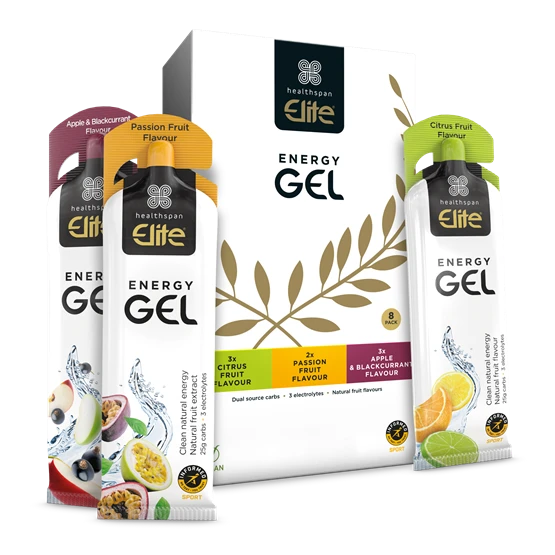
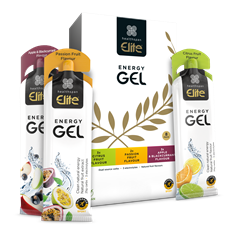
Energy Gel – Mixed Pack
Fast-acting carbohydrate gels for endurance training and race day
- 25g of dual-source carbohydrate per 60g sachet.
- A 2:1 combination of maltodextrin and fructose.
- Added sodium, potassium and calcium.
- Natural pectin creates a lighter consistency that can be consumed without water.
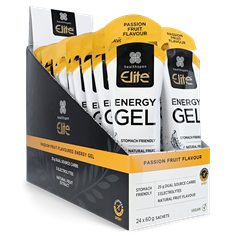
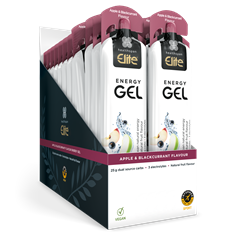
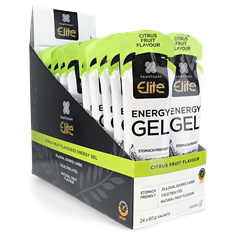
- Eight gels in Apple & Blackcurrant, Citrus and Passion Fruit flavours.
- Certified and independently batch tested through Informed Sport.
How many gels do you need for a 90-minute run?
For many runners, one or two gels will be sufficient for a 90-minute run.
During a steady training run, one gel taken at around 40–50 minutes may provide enough carbohydrate to support the remaining session. During a harder race-pace effort, a second gel later in the run may help you maintain a more consistent intake.
Your carbohydrate intake should reflect the session's intensity as well as its duration. A runner completing a comfortable long run may require less than someone racing for the same amount of time.
How many energy gels do you need for a marathon?
A marathon requires a more substantial fuelling strategy than a half marathon because carbohydrate must be supplied consistently over a longer period.
Rather than choosing a fixed number of gels without considering the rest of your nutrition, calculate how much carbohydrate you plan to consume each hour. Endurance guidance commonly recommends approximately 30–60g of carbohydrate per hour during prolonged exercise, with higher amounts sometimes used during longer events by athletes who have trained their gut accordingly.
Because each Healthspan Elite Energy Gel contains 25g of carbohydrate, using gels as your only fuel would generally mean approximately one to two gels per hour. However, many runners combine gels with carbohydrate drinks, chews or other food, which reduces the number of gels required.
- Targeting 30g carbohydrate per hour: approximately one gel per hour, plus a small amount from another carbohydrate source.
- Targeting 50–60g per hour: approximately two gels per hour, or one gel combined with a carbohydrate drink or food.
- Using several formats: add the carbohydrate from every product together to avoid unintentionally under-fuelling or overloading your digestive system.
Healthspan Elite Energy Gel directions state that consumption should not exceed five sachets daily. Runners whose planned carbohydrate intake would require more than five gels should use other carbohydrate sources alongside them or seek personalised advice from a qualified sports nutritionist.
For longer-distance preparation, read our guide to fuelling a long-distance race.
Which energy gels are best for running?
Choosing the right gel matters as much as timing it correctly. The product needs to provide an appropriate amount of carbohydrate while remaining practical and comfortable to consume when you are running at race intensity.
Carbohydrate source
Research into multiple transportable carbohydrates suggests that combining carbohydrate sources such as glucose or maltodextrin with fructose can increase carbohydrate delivery and oxidation compared with relying on glucose alone at higher intake rates.
Healthspan Elite Energy Gels use a 2:1 combination of maltodextrin and fructose, providing 25g of carbohydrate per sachet.
Electrolytes
Longer races also involve fluid and electrolyte losses through sweat. Healthspan Elite Energy Gels contain sodium, potassium and calcium, although gels should form part of a wider hydration plan rather than being treated as a replacement for fluid.
Texture and tolerance
Texture can affect how comfortable a gel feels during running. Healthspan Elite uses natural pectin to produce a lighter and more fluid consistency, allowing the gel to be consumed without water.
Tolerance remains individual, so try several flavours and practise using the gels during training before settling on your race-day choice.
Caffeine
Some energy gels contain caffeine, but the current Healthspan Elite Energy Gels do not. This allows runners to manage carbohydrate and caffeine separately and avoid accidentally combining several caffeinated products.
Runners who use caffeine should calculate their total intake from coffee, gum, pre-workout products and any other source, and test the approach during training.
Informed Sport testing
Athletes who compete under anti-doping rules should look for products that have undergone recognised banned-substance testing.
Healthspan Elite Energy Gels are independently batch tested through the Informed Sport programme, providing additional assurance for competing athletes.
Healthspan Elite Energy Gels
Healthspan Elite Energy Gels provide 25g of dual-source carbohydrate per sachet, with natural fruit flavours, natural pectin and the electrolytes sodium, potassium and calcium.
The Mixed Pack contains eight gels across Apple & Blackcurrant, Citrus and Passion Fruit flavours, making it a practical option for testing each flavour during training before choosing your race-day preference.
For a broader introduction, read Energy Gels: What Are They and How Should You Use Them?
You can also browse the complete Healthspan Elite energy gel range.
Quality Assurance
Healthspan Elite Energy Gels are certified and independently batch tested through the Informed Sport programme. The products are tested by LGC's sports anti-doping laboratory for a wide range of substances prohibited in sport.
Always follow the directions shown on the packaging. Consume one to three sachets per hour of exercise, or as advised by your nutritionist. Consumption should not exceed five sachets daily.
The gels do not need to be consumed with water, but runners should continue to follow an appropriate hydration plan. Food supplements should not be used as a substitute for a varied, balanced diet and a healthy lifestyle.