
.png)
.png)
.png)
.png)
_2026122-125305.png)
_2026122-125305.png)

_2026122-125305.png)
_2026122-125305.png)
_2026122-125305.png)









Effective hydration begins before thirst takes over. Building a proactive routine can help female athletes arrive at training better prepared, manage exercise-related fluid losses and support performance, recovery and everyday wellbeing.
- Moving from reactive to proactive hydration.
- Accounting for exercise, temperature and individual cycle responses.
- Building a practical routine before, during and after training.
🕒 4 min read
Don’t Leave Performance on the Table
Most athletes are reactive with their hydration. They drink when they feel thirsty, grab a coffee on the way to a session and then wonder why the first kilometre feels harder than it should.
This is more common than you might think. Poor hydration habits can mean beginning a session less prepared than you could be. Improving those habits can support more consistent preparation and help you perform closer to your potential.
By the Time You Feel Thirsty, You May Already Be Behind
Thirst is useful, but it should not be the only signal athletes rely on. During exercise, particularly in warm conditions or during longer sessions, fluid losses can build before thirst prompts sufficient drinking.
Exercise-related dehydration exceeding approximately 2% of body mass can compromise endurance performance, although the precise effect depends on the athlete, environment and activity being performed (1).
Consider what happens after waking. For many people, coffee is the first drink of the day before they head directly to a training session. Coffee can contribute towards overall fluid intake, particularly in habitual coffee drinkers, so it does not need to be removed. The practical issue is allowing coffee to replace other fluids entirely before training (2).
A straightforward approach is to drink approximately 500 to 750 ml of fluid during the first 60 minutes after waking, adjusted for your comfort, body size and upcoming activity, while enjoying your coffee alongside it.
- Keep water beside your bed or prepare a bottle the night before.
- Drink fluids during the first hour after waking.
- Enjoy coffee alongside water rather than using it as your only drink.
- Consider the temperature and demands of the session ahead.
The Female Layer: Why Individual Responses Matter
For female athletes, hydration is not only about total fluid intake. It can also involve understanding how temperature regulation, symptoms and perceived training tolerance may change across the menstrual cycle.
Core body temperature may be modestly elevated during the luteal phase, which is the second half of an ovulatory menstrual cycle. Some research has also observed higher sweat rates under specific exercise and environmental conditions (3).
However, this response is not identical in every athlete. Current reviews show that menstrual-cycle effects on exercise performance and related physiological outcomes are generally mixed, small and highly individual (4,5).
Rather than assuming that hydration requirements will always increase at a particular point in the cycle, athletes can monitor their own thirst, sweat losses, urine colour, temperature tolerance, symptoms and perceived effort. This can help identify whether additional fluids or electrolytes are useful at certain times.
- Notice whether you feel hotter or sweat more during particular sessions.
- Consider the training environment, intensity and session duration.
- Track thirst, urine colour and changes in body mass around exercise.
- Adjust fluids and electrolytes according to your own repeated patterns.
What Good Hydration Actually Looks Like
Hydrating for a session does not start when the session starts. It begins during the hours beforehand and continues throughout exercise and recovery.
- Morning: Begin drinking during the first hour after waking rather than waiting until training starts.
- Before exercise: Arrive with normal thirst and pale-yellow urine rather than trying to consume a large volume immediately before the session.
- During exercise: Sip fluids according to the temperature, intensity, duration and your individual sweat rate.
- After exercise: Replace fluids gradually. When rapid rehydration is required, fluid intake can be based on the body mass lost during the session rather than an arbitrary fixed volume (6).
- Across the day: Continue drinking regularly and increase intake when activity levels, sweat losses or environmental temperatures rise.
There is no single daily fluid target that is appropriate for every female athlete. Requirements vary according to body size, food intake, training volume, sweat rate, climate and individual health.
Electrolytes may be particularly useful after prolonged, hot or very sweaty sessions, or when another training session is scheduled soon afterwards. Sodium-containing drinks can support fluid retention when meaningful rehydration is required (1,7).
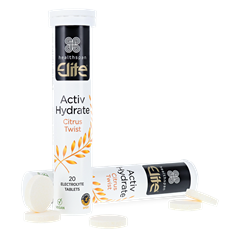
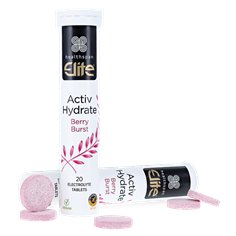
For a convenient electrolyte option, choose Elite Activ Hydrate Berry Burst 40 Tabs or Elite Activ Hydrate Citrus Twist 40 Tabs. Both formats are designed to be dissolved in water for use during or after exercise, according to individual requirements and the product directions.
A post-training recovery drink containing protein, carbohydrate and fluid can also help cover several recovery priorities at once. A fruit smoothie made with milk or yoghurt is one practical example.
Stop Being Reactive
Stop waiting until the session has already begun to think about hydration. Shift from reactive to proactive by building fluid intake into the hours before training.
From my experience in elite sport, the athletes who manage hydration consistently are better placed to arrive prepared and feel ready from the beginning of a session. It does not need to be complicated. Keep a bottle with you, pay attention to your individual responses and stay one step ahead.
The Bottom Line
- Thirst is useful, but it should not be your only hydration signal.
- Significant fluid deficits can impair endurance performance, particularly in warm conditions.
- Coffee can contribute to fluid intake, but it should not replace a wider hydration routine.
- Menstrual-cycle responses vary, so monitor your own symptoms, sweat losses and training tolerance.
- Electrolytes may be useful after hot, prolonged or particularly sweaty exercise.
- Hydration starts before the session, not when thirst becomes difficult to ignore.
Quality Assurance
Quality assurance is an important consideration when choosing sports nutrition products. Athletes should look for products that are manufactured to high standards and, where relevant, tested through recognised third-party programmes such as the Informed Sport Program.