.png)
.png)
.png)
.png)
_2026122-125305.png)
_2026122-125305.png)

_2026122-125305.png)
_2026122-125305.png)
_2026122-125305.png)









Most athletes already use caffeine without thinking of it as a supplement. A coffee before training or a tea before a race can provide caffeine, but the exact dose may be difficult to judge. Caffeine supplements deliver a precise, measured amount in a format designed around exercise, which can make a meaningful difference when the margins matter. This guide covers what they are, what they do, how the different types compare and whether they are safe to use.
🕒 6 min read
What do caffeine supplements do?
Caffeine supplements deliver a measured amount of caffeine in a convenient format. The caffeine itself works in the same way as caffeine from coffee or tea, but the stated dose makes it easier to plan and monitor your intake.
Caffeine works primarily by blocking adenosine receptors in the brain. Adenosine builds up while you are awake and contributes to feelings of tiredness. By temporarily blocking its effects, caffeine can increase alertness and reduce perceived exertion during exercise, meaning a given effort may feel less demanding.
A systematic review and meta-analysis of 21 randomised controlled trials found positive effects on endurance running, including improvements in time to exhaustion and a small improvement in time-trial performance.
The Great Britain Nutrition and Health Claims Register also includes authorised claims relating to caffeine, alertness and endurance performance, subject to the relevant conditions of use.
The practical advantage of a supplement over coffee is consistency. The caffeine content of coffee can vary according to the beans, serving size, brewing method and strength, whereas a supplement provides a stated amount per serving.
- It provides a clearly stated amount of caffeine per serving.
- It makes total daily caffeine intake easier to monitor.
- Different formats can be selected according to the required timing.
- Portable options can be easier to use around training and competition.
- Batch-tested products provide additional assurance for competing athletes.
What are the different types of caffeine supplements?
Caffeine supplements come in several formats, each with different absorption characteristics and practical applications. Understanding these differences can help you select the most suitable option for your training, competition schedule and personal caffeine tolerance.
Caffeine tablets and pills
Caffeine tablets and pills provide a compressed, measured amount of caffeine that is swallowed with water. They are absorbed through the digestive system and are therefore normally taken in advance of exercise rather than at the moment the effect is required.
Their principal advantages are simplicity, portability and dose accuracy. The drawback is that swallowing a tablet may be inconvenient during a run, match or other active event.
Are caffeine pills safe?
For most healthy adults, caffeine supplements can be used safely when the product directions and total daily intake are carefully followed. However, caffeine pills can contain a concentrated amount in a small serving, so they should not be treated casually.
Sports studies frequently use doses measured in milligrams per kilogram of body weight, but these research ranges should not be treated as a universal personal recommendation. Depending on body weight, a 3–6mg per kilogram dose could exceed general single-serving guidance.
Current UK guidance advises that single servings of up to 200mg and total daily caffeine intake of up to 400mg are unlikely to cause adverse effects in most healthy adults. This total includes caffeine from supplements, coffee, tea, energy drinks and other dietary sources.
Higher intakes increase the risk of anxiety, jitteriness, gastrointestinal discomfort, a racing or irregular heartbeat and disrupted sleep. Anyone taking prescribed medication or managing an existing health condition should consult a doctor or pharmacist before using a caffeine supplement.
Caffeine gum
Caffeine gum contains a measured amount of caffeine within chewing gum. Unlike a swallowed tablet, some of the caffeine dissolved in saliva can be absorbed through the lining of the mouth while the gum is chewed. The remaining caffeine is swallowed and absorbed through the digestive system.
This partial oral absorption can make caffeine gum faster acting than formats that depend entirely on digestion. It can therefore be useful shortly before exercise or at a planned point during training or competition.
Healthspan Elite Kick-Start Caffeine Gum provides 100mg of caffeine per peppermint-flavoured piece, with approximately 85% absorbed within 10–15 minutes. It also contains vitamins B3, B6 and B12, which support normal energy-yielding metabolism.
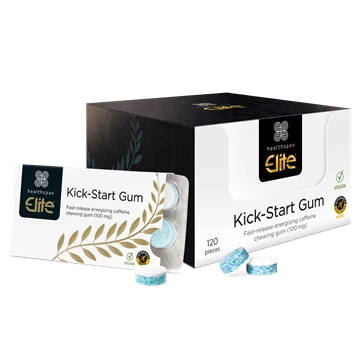
Kick-Start Caffeine Gum
Fast-release peppermint caffeine gum for training and competition
- 100mg caffeine per piece to help increase mental alertness.
- Approximately 85% caffeine absorption within 10–15 minutes.
- Vitamins B3, B6 and B12 support normal energy-yielding metabolism.
- Individually sealed blister packaging for convenient use on the move.
- Certified and independently batch tested through Informed Sport.
Caffeine in pre-workout supplements
Pre-workout supplements may contain caffeine alongside other active ingredients selected to support a training session. Common ingredients include creatine, beta-alanine, citrulline, amino acids, taurine and B vitamins.
The amount of caffeine varies considerably between pre-workout products, so always check the supplement information rather than assuming every formula contains a similar dose.
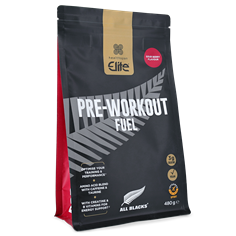
Healthspan Elite All Blacks Pre-Workout Fuel combines caffeine with creatine, beta-alanine, citrulline malate, glutamine, tyrosine, taurine and vitamins B3, B6 and B12. Its current product information table lists 40mg of caffeine per serving.
For a broader explanation of these products, read What Are Pre-Workout Supplements and What Do They Do?
How are caffeine supplements different from each other?
The most meaningful differences between caffeine supplement formats are the speed at which caffeine becomes available, how easily the product can be used during exercise and whether caffeine is supplied alone or alongside other active ingredients.
- Tablets and pills: precise and straightforward, but normally need to be taken in advance and may be inconvenient during exercise.
- Caffeine gum: partly absorbed through the mouth, making it a practical faster-release option immediately before or during activity.
- Pre-workout formulas: combine caffeine with other ingredients, so the complete formula and total caffeine amount must be considered.
- Caffeinated gels and drinks: may combine caffeine with carbohydrate or fluid, but caffeine content varies and must be checked on the label.
Tablets may suit athletes who want a simple caffeine-only format and can plan their intake in advance. Gum may be more practical where time is limited or caffeine is required during an event. Pre-workouts are intended to provide a broader combination of training ingredients rather than caffeine alone.
No single format is automatically best for every athlete. Your choice should account for the sport, timing, digestive comfort, total daily caffeine intake and whether you need other ingredients alongside the caffeine.
How much caffeine do pre-workout supplements contain?
There is no standard caffeine amount across all pre-workout supplements. Some formulas are caffeine-free, while others contain a concentrated stimulant dose. The exact amount should be clearly listed in the product's supplement information.
Before using a pre-workout, calculate how its caffeine content fits alongside coffee, tea, energy drinks, caffeine gum and any other source consumed that day. Taking several caffeinated products without adding the amounts together is one of the easiest ways to unintentionally exceed your intended intake.
The current Healthspan Elite All Blacks Pre-Workout Fuel information table lists 40mg caffeine per serving. Kick-Start Caffeine Gum provides 100mg per piece. These are different products intended for different practical uses, so the right choice depends on whether you want a broader pre-workout formula or a standalone, faster-release caffeine format.
Always follow the product directions. Up to 200mg in a single serving and 400mg across the day are considered unlikely to cause adverse effects in most healthy adults, but caffeine-sensitive individuals may experience unwanted effects at lower amounts.
For more detail on caffeine and athletic performance, read Caffeine for Athletes: All You Need to Know and How Caffeine Before a Workout Can Improve Your Performance.
Explore Healthspan Elite caffeine products or browse the complete sports nutrition range.
Quality Assurance
Athletes who are subject to drug testing should check whether a sports supplement has undergone an appropriate banned-substance testing programme.
Healthspan Elite Kick-Start Caffeine Gum is independently batch tested through the Informed Sport programme, providing additional assurance for competing athletes.
Always follow the recommended intake shown on the product packaging. Contains caffeine. Not recommended for children or pregnant women. Excessive consumption of caffeine gum may produce a laxative effect. Food supplements should not be used as a substitute for a varied, balanced diet and a healthy lifestyle.