
.png)
.png)
.png)
.png)
_2026122-125305.png)
_2026122-125305.png)

_2026122-125305.png)
_2026122-125305.png)
_2026122-125305.png)









Hydration is often discussed in the context of sport, but it also matters for general daily performance. For athletes, coaches, practitioners, and active professionals, work performance often depends on concentration, decision-making, communication, mood, and the ability to sustain attention across the day.
- How hydration can influence focus, mood and cognitive performance.
- Why your working day matters for training readiness.
- Practical ways to maintain hydration throughout the day.
Why Hydration Matters Beyond Training
Fluid balance can influence many of these areas. Research suggests that dehydration can negatively affect attention, psychomotor performance, immediate memory, mood, and subjective feelings of fatigue (1,2). This means hydration should not only be viewed as a training strategy, but also as a daily performance behaviour.
For athletes, this is particularly relevant on busy work or study days where training sits around meetings, travel, screen time, and decision-heavy tasks. Poor hydration across the day can make training feel harder later on and may also reduce the quality of work completed before training.
Hydration and Cognitive Performance
The brain is sensitive to changes in hydration status. A review on dehydration and cognitive performance reported that dehydration of around 2% body mass can impair tasks requiring attention, psychomotor skill, immediate memory, and subjective state (1).
This matters in a work setting because many daily tasks rely on sustained concentration. Reading, writing, presenting, planning, reviewing data, coaching, and making decisions all require cognitive resources.
In young men, mild dehydration impaired vigilance and working memory and increased fatigue and anxiety (3). In young women, mild dehydration worsened mood, increased perception of task difficulty, reduced concentration, and increased headache symptoms (4).
This does not mean every dip in focus is caused by dehydration. However, it does highlight that hydration is a modifiable factor that can influence how sharp, focused, and productive you feel.
Hydration and Mood
Work performance is not only about cognition. Mood and perceived energy also influence productivity.
Mild dehydration has been linked with increased fatigue, lower mood, and greater perceived task difficulty (3,4). This can make normal work feel harder than it needs to, especially during long afternoons, hot weather, or after morning training.
For athletes, this becomes even more relevant when trying to balance work, training, family life, and recovery. If hydration is poor across the day, you may feel more drained before the training session even begins.
A simple daily hydration routine can therefore support both general wellbeing and the ability to maintain consistency with training.
Hydration and Physical Readiness After Work
Many athletes train before or after work. This means hydration during the working day can directly influence training readiness.
Starting exercise in a hypohydrated state can increase cardiovascular strain, impair thermoregulation, and reduce endurance performance, particularly in warm conditions (5,6). If an athlete sits at a desk all day, drinks very little, then tries to complete a hard evening session, they may be starting from a compromised position.
This is one reason hydration should be planned before training, not corrected once the session starts.
- Drink fluids with meals.
- Keep a bottle at your desk or nearby.
- Plan additional fluid intake before exercise.
Electrolytes and Daily Hydration
For general office-based hydration, water and normal meals will be enough for most people. Food provides electrolytes, including sodium, potassium, magnesium, and calcium, which support fluid balance and normal neuromuscular function (5,7).
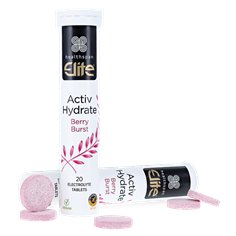
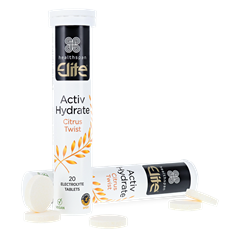
However, electrolyte products like Healthspan Elite Activ Hydrate can be useful in specific situations. This includes hot days, active jobs, heavy sweaters, athletes training before work, athletes training after work, or anyone who struggles to maintain fluid intake because plain water is unappealing.
- Hot days or warm working environments.
- Physically active jobs.
- High sweat losses.
- Training before or after work.
- When plain water makes regular drinking difficult.
This type of product is not a replacement for good daily habits. Its practical role is to make hydration easier and more effective when fluid and electrolyte needs are higher.
When Carbohydrate Is Relevant
Most desk-based work does not require carbohydrate-electrolyte drinks. If someone is simply trying to stay hydrated during a normal workday, water or an electrolyte-only option is usually more appropriate.
However, carbohydrate becomes relevant when work is built around training or prolonged activity. For example, an athlete completing a long morning run before work, an active professional with a physically demanding job, or someone training again after work may need both hydration and fuel.
For example, Healthspan Elite Carb Fuel provides 80 g carbohydrate per sachet, a 1:0.8 maltodextrin-to-fructose ratio, and added electrolytes, including 300 mg sodium per serving.
In practice, this is a training product rather than a general office hydration product. It may be useful when the workday includes endurance training, high-volume exercise, or a need to recover and refuel between sessions.
Practical Hydration Habits for Work
The most effective hydration strategy is usually the one you can repeat.
- A drink with breakfast.
- A bottle on your desk or in your bag.
- Fluids with lunch.
- A hydration check mid-afternoon.
- Extra fluid before training.
- Electrolytes when sweat losses are high.
Urine colour can be used as a simple guide, although it should not be treated as a perfect measurement. Thirst, urine colour, training readiness, and daily routine all provide useful feedback.
The aim is not to force excessive fluid intake. Overdrinking can be uncomfortable and unnecessary. The goal is to avoid spending large parts of the day underhydrated.
Common Hydration Mistakes
The first common mistake is relying on thirst alone. Thirst is useful, but it may not always prompt regular drinking during busy workdays.
The second is drinking most fluids late in the day. This can leave the athlete underhydrated during work and may increase sleep disruption if large amounts are consumed close to bedtime.
The third is assuming electrolytes are only for endurance events. Electrolytes can be useful outside competition when sweat losses are high, when training is close to the workday, or when fluid retention needs to be improved.
The fourth is using carbohydrate products when they are not needed. Carb-electrolyte drinks have a clear role around prolonged exercise, but they are not usually required for normal desk-based work.
Application to Your Situation
For general daily performance, start with water and consistent habits. Drink with meals, keep fluids visible, and avoid long periods without drinking.
If you train around work, hydration becomes part of the preparation for that session. If you sweat heavily, work in warm conditions, or struggle to drink enough plain water, an electrolyte product such as Healthspan Elite Activ Hydrate may be useful.
If your workday includes long endurance training or repeated sessions, a carbohydrate-electrolyte product such as Healthspan Elite Carb Fuel may be relevant, but it should be matched to training demands rather than used as a general hydration drink.
Key Takeaway
Hydration can affect more than physical performance. It can influence focus, mood, fatigue, and readiness to train. For most people, the foundation is regular water intake across the day. Electrolytes can be useful when sweat losses are high or fluid retention matters, while carbohydrate-electrolyte products are best reserved for training demands rather than general office hydration.
Quality Assurance
Quality assurance is an important consideration when choosing sports nutrition products. Athletes should look for products that are manufactured to high standards and, where relevant, tested through recognised third-party programmes such as the Informed Sport Program.